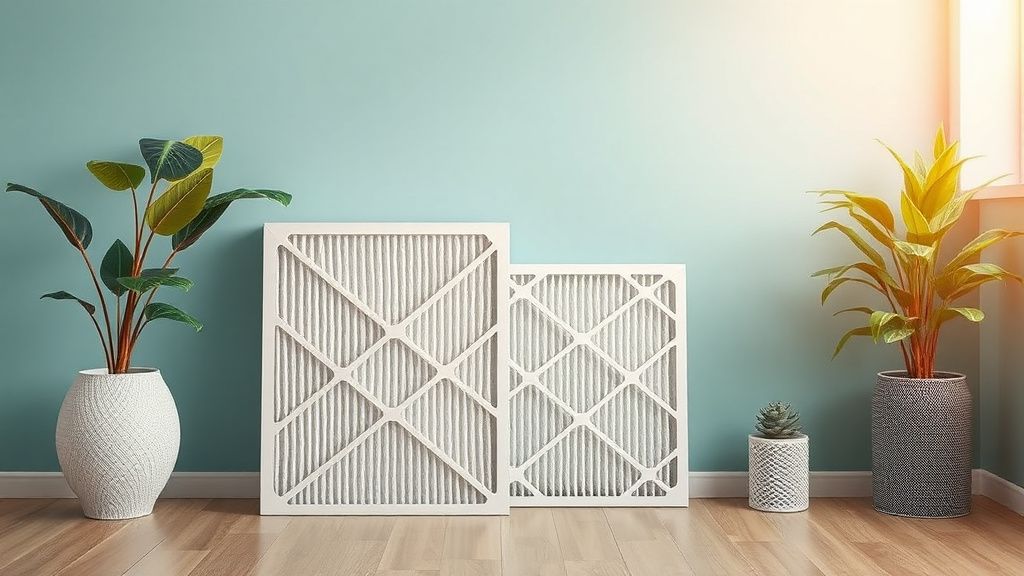
How to Spot Fake or Low-Quality Air Filters: A Buyer’s Beware Guide
When it comes to maintaining indoor air quality, your HVAC or furnace filter plays a critical role. A high-quality air filter traps dust, pollen, pet dander, and other airborne contaminants, ensuring cleaner air and protecting your HVAC system. Unfortunately, not all filters are created equal—some are outright fakes, while others are low-quality imitations that fail to perform as advertised.
This guide will help you identify fake or subpar air filters so you can make informed purchasing decisions.
Why Fake or Low-Quality Air Filters Are a Problem
Fake or poorly made air filters can cause several issues:
- Reduced Air Quality – A low-quality filter may not capture fine particles effectively, allowing allergens and pollutants to circulate in your home.
- Increased Energy Costs – A filter that doesn’t fit properly or has weak pleating can restrict airflow, forcing your HVAC system to work harder.
- HVAC System Damage – Poor filtration allows dust and debris to accumulate on coils and blower motors, leading to costly repairs.
- False MERV Ratings – Some filters claim high MERV (Minimum Efficiency Reporting Value) ratings but lack the proper construction to meet those standards.
Common Signs of Fake or Low-Quality Air Filters
1. Poor Fit and Flimsy Construction
A genuine air filter should fit snugly in your HVAC or furnace filter slot without gaps. Fake or low-quality filters often:
- Have loose or uneven frames that don’t seal properly.
- Use flimsy cardboard or plastic frames that bend easily.
- Are slightly undersized, allowing air to bypass the filter.
What to look for: Check the dimensions against your HVAC system’s requirements. A well-made filter will have a rigid frame and a tight fit.
2. Thin or Weak Filter Media
The filter media (the material that traps particles) should be dense enough to capture contaminants without restricting airflow. Low-quality filters may have:
- Thin, loosely woven material that lets dust pass through.
- Uneven pleating (if pleated) that collapses under airflow.
- Cheap fiberglass instead of electrostatically charged synthetic media (common in higher-end filters).
What to look for: Hold the filter up to a light source—if you can see large gaps in the media, it won’t filter effectively.
3. Misleading MERV Ratings
MERV ratings indicate a filter’s efficiency, ranging from 1 (least efficient) to 16 (highly efficient). Some fake filters:
- Claim a high MERV rating (e.g., MERV 13) but lack the necessary pleat density or media quality.
- Have no certification or testing documentation to back up their claims.
What to look for: Stick to reputable brands that provide independent lab testing results. A true MERV 11+ filter will have tightly packed pleats and a sturdy construction.
4. Lack of Branding or Packaging Details
Legitimate air filters typically include:
- Clear branding and model numbers.
- A barcode or QR code for verification.
- Proper labeling of MERV rating, dimensions, and airflow direction.
Fake filters often have:
- Blurry or missing logos.
- Generic packaging with no manufacturer details.
- Spelling errors or inconsistent labeling.
What to look for: Purchase from authorized retailers or the manufacturer’s website to avoid counterfeit products.
5. Unusually Low Prices
While everyone loves a bargain, air filters priced significantly below market rates are often counterfeit or low-quality. High-efficiency filters (MERV 11+) require more material and engineering, so they cost more.
What to look for: Compare prices across trusted retailers. If a deal seems too good to be true, it probably is.
Types of Air Filters and Their Vulnerabilities
Different filter types have unique weaknesses that counterfeiters exploit:
- Fiberglass Filters (MERV 1-4) – The cheapest and least efficient, often faked with even thinner material that does almost nothing.
- Pleated Filters (MERV 5-13) – Counterfeits may have fewer pleats or weak glue that causes them to collapse.
- HEPA-Like Filters (MERV 14-16) – Some claim “HEPA-like” performance but lack the true HEPA standard (which requires 99.97% efficiency at 0.3 microns).
Where Fake Filters Are Sold
Fake air filters often appear in:
- Unverified third-party sellers on online marketplaces.
- Discount stores with no HVAC specialty.
- Unauthorized resellers offering “bulk deals.”
To avoid them, buy from:
- HVAC supply stores.
- Manufacturer websites.
- Reputable home improvement retailers.
What to Look for in a Genuine, High-Quality Air Filter
To ensure you’re getting the real deal, check for:
✅ Accurate dimensions – Matches your HVAC system’s specifications.
✅ Dense, uniform pleating – No gaps or loose sections.
✅ Sturdy frame – Rigid construction that won’t bend or warp.
✅ Clear labeling – Legible MERV rating, brand name, and airflow direction.
✅ Reputable seller – Purchased from a trusted supplier.
Final Thoughts
A fake or low-quality air filter can harm your health, increase energy bills, and damage your HVAC system. By knowing what to look for—and where to buy—you can avoid scams and ensure your home’s air stays clean. Always verify product details, stick to trusted brands, and don’t compromise on quality for a lower price. Your lungs (and your HVAC system) will thank you.
Our picks worth a closer look
Phone cases · Sponsored · 15% off first order
Phone Case Gift — They pick the model · 2 minutes Code FIRST15GIFT
- Filtrete 16x25x1 AC Furnace Air Filter, MPR 1000 MERV 11Check on Amazon → — see current price and specs.
- Utopia Bedding Bed Pillows for Sleeping Queen Size (Blue), Set of 6, Cooling HotCheck on Amazon → — see current price and specs.