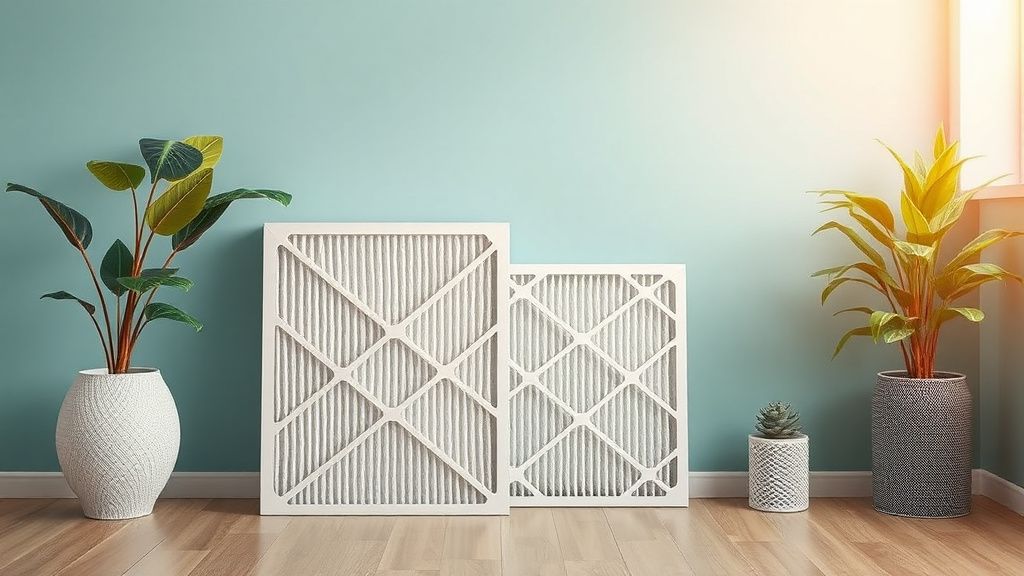
How to Troubleshoot Airflow Issues Caused by Your Filter
Poor airflow in your HVAC system can lead to uneven heating or cooling, higher energy bills, and even premature wear on your furnace or air conditioner. Often, the culprit is a dirty, improperly installed, or incorrectly sized air filter. Here’s how to diagnose and fix airflow problems related to your filter.
Check for a Dirty or Clogged Filter
Phone cases · Sponsored · 15% off first order
Phone Case Gift — They pick the model · 2 minutes Code FIRST15GIFT
The most common cause of airflow issues is a filter that’s overdue for replacement. Over time, dust, pet hair, and other debris accumulate, restricting airflow.
What to Look For:
- Visible dirt and debris – Hold the filter up to a light source. If you can’t see light passing through, it’s clogged.
- Increased dust in your home – A dirty filter can’t trap particles effectively, leading to more dust settling on surfaces.
- Longer HVAC runtime – If your system runs constantly but doesn’t reach the desired temperature, airflow may be restricted.
Solution:
Replace disposable filters every 1-3 months, depending on usage and MERV rating. Wash reusable filters according to the manufacturer’s instructions.
Verify the Filter’s MERV Rating
Filters with a high MERV (Minimum Efficiency Reporting Value) rating capture more particles but can also restrict airflow if your system isn’t designed for them.
What to Look For:
- MERV 8-11 – Standard for most residential systems, balancing filtration and airflow.
- MERV 13+ – Used in hospitals and cleanrooms, but may strain residential HVAC systems not built for high static pressure.
Solution:
If you suspect your high-MERV filter is causing airflow problems, switch to a lower-rated filter (MERV 8-11) and monitor performance.
Ensure Proper Filter Installation
Phone cases · Sponsored · 15% off first order
Titan Case — Precision fit · 2,000+ designs Code FIRST15TIT
An incorrectly installed filter can allow air to bypass filtration, reducing efficiency, or block airflow entirely if it’s misaligned.
What to Look For:
- Airflow arrows pointing the wrong way – Filters have directional arrows indicating proper airflow alignment.
- Gaps around the edges – If the filter doesn’t fit snugly, unfiltered air can leak through.
- Filter installed upside down – Some filters have a reinforced frame that must face a specific direction.
Solution:
Remove and reinstall the filter, ensuring arrows point toward the furnace or air handler. If the filter is too small, replace it with the correct size.
Confirm the Filter Size Matches Your System
Using the wrong size filter (too thick or too thin) can cause airflow problems.
What to Look For:
- Filter dimensions printed on the frame – Compare these to your system’s filter slot.
- Filter bending or bowing – A filter that’s too thin may collapse under suction.
- Air leaks around the edges – A too-small filter won’t seal properly.
Solution:
Measure your filter slot and buy the exact size recommended by your HVAC manufacturer. If unsure, check your system manual or consult an HVAC technician.
Consider Filter Material and Design
Phone cases · Sponsored · 15% off first order
Phone Cases For Charity — Every case supports a cause Code GIVE10Different filter materials (fiberglass, pleated, electrostatic) affect airflow differently.
What to Look For:
- Fiberglass filters – Thin and low-resistance but offer minimal filtration.
- Pleated filters – More efficient but can restrict airflow if too dense.
- Electrostatic filters – Self-charging fibers trap particles but may clog faster.
Solution:
If your system struggles with pleated filters, try a less dense model or a fiberglass filter (if acceptable for your air quality needs).
Inspect for Secondary Airflow Restrictions
Sometimes, the filter isn’t the only issue. Other factors can compound airflow problems.
What to Look For:
- Blocked vents or registers – Furniture or curtains obstructing vents reduce airflow.
- Dirty evaporator coils – Clogged coils strain the system, worsening filter-related airflow issues.
- Leaky ductwork – Poorly sealed ducts can reduce system efficiency.
Solution:
Clear obstructions from vents, schedule professional coil cleaning, and have ducts inspected for leaks if airflow remains weak after filter changes.
When to Call an HVAC Professional
If you’ve checked all filter-related issues and airflow is still poor, the problem may lie deeper in your HVAC system.
Signs You Need Professional Help:
- Blower motor issues – Weak airflow despite a clean filter.
- Frozen evaporator coils – Caused by prolonged airflow restriction.
- Unusual noises – Grinding or rattling from the furnace or air handler.
Solution:
Contact a licensed HVAC technician to inspect your system for mechanical or electrical failures.
What to Look for in a Replacement Filter
When buying a new filter, consider:
- Correct size (exact dimensions, not “close enough”).
- MERV rating (8-11 for most homes, unless your system supports higher).
- Material (pleated for better filtration, fiberglass for minimal restriction).
- Compatibility (check if your system requires a specific type).
By troubleshooting these common filter-related airflow issues, you can keep your HVAC system running efficiently and maintain better indoor air quality.
Our picks worth a closer look
- GE MWF Refrigerator Water FilterCheck on Amazon → — see current price and specs.
- Filtrete 16x25x1 AC Furnace Air Filter, MPR 1000 MERV 11Check on Amazon → — see current price and specs.