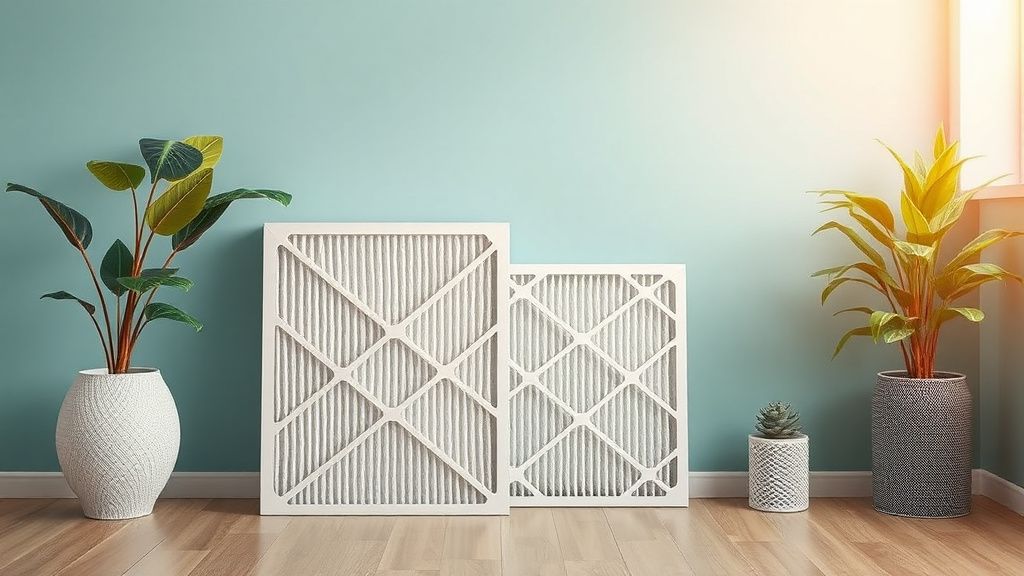
MERV 11 vs. MERV 13: Which is Right for Your Home?
Choosing the right air filter for your HVAC system is critical for maintaining indoor air quality and system efficiency. Two of the most common options are MERV 11 and MERV 13 filters, which offer different levels of filtration. Understanding their differences will help you decide which is best for your home.
What Are MERV Ratings?
MERV (Minimum Efficiency Reporting Value) ratings measure how effectively an air filter captures particles between 0.3 and 10 microns. The scale ranges from 1 (least efficient) to 16 (most efficient). Residential filters typically fall between MERV 8 and MERV 13, with higher numbers trapping smaller particles.
MERV 11 Filters: Balanced Filtration for Most Homes
MERV 11 filters capture 85-90% of particles between 1-3 microns, including:
- Dust
- Pollen
- Pet dander
- Mold spores
- Larger bacteria
These filters strike a balance between filtration and airflow, making them suitable for most homes. They won’t restrict HVAC performance significantly, which is important for systems not designed for high-MERV filters.
Best For:
- Homes with mild allergies or moderate dust issues
- Standard HVAC systems without modifications
- Areas with moderate outdoor air pollution
MERV 13 Filters: Enhanced Protection for Sensitive Households
MERV 13 filters capture 90-95% of particles as small as 0.3 microns, including:
- Smoke particles
- Smaller bacteria
- Virus carriers (like respiratory droplets)
- Fine dust and smog
These filters are ideal for households with severe allergies, asthma, or concerns about airborne contaminants. However, they can restrict airflow if your HVAC system isn’t designed for them, potentially reducing efficiency or causing strain.
Best For:
- Homes with severe allergies, asthma, or respiratory conditions
- High-pollution areas (near highways, industrial zones)
- Upgraded HVAC systems with stronger blower motors
Key Differences Between MERV 11 and MERV 13
| Feature | MERV 11 | MERV 13 |
|---|---|---|
| Particle Capture | 1-3 microns | 0.3-1 microns |
| Allergen Reduction | Good | Excellent |
| Airflow Resistance | Low | Moderate-High |
| HVAC Compatibility | Works in most systems | May require system upgrades |
| Replacement Frequency | Every 3 months | Every 2-3 months (clogs faster) |
Will MERV 13 Strain Your HVAC System?
Not all HVAC systems can handle MERV 13 filters. Higher-MERV filters have denser material, which can:
- Reduce airflow, making your system work harder
- Increase energy costs if the blower isn’t powerful enough
- Cause premature wear on older systems
Check your HVAC manual or consult an HVAC professional before switching to MERV 13. Some systems, especially newer or variable-speed models, handle them well.
What to Look for When Choosing Between MERV 11 and MERV 13
- HVAC System Compatibility – Ensure your system can handle higher-MERV filters without losing efficiency.
- Indoor Air Quality Needs – If allergies or pollution are a concern, MERV 13 may be worth the trade-off.
- Filter Thickness – Thicker filters (4-5 inches) often handle higher MERV ratings better than 1-inch filters.
- Replacement Cost – MERV 13 filters cost slightly more and may need replacing more often.
Final Recommendation
- Stick with MERV 11 if you want reliable filtration without risking HVAC strain.
- Upgrade to MERV 13 if you need superior particle capture and your system can support it.
For the best results, pair your filter with regular HVAC maintenance and consider adding a standalone air purifier for extra protection in high-traffic rooms.
Our picks worth a closer look
Phone cases · Sponsored · 15% off first order
Phone Case Gift — They pick the model · 2 minutes Code FIRST15GIFT
- Filtrete Healthy Living Ultra Allergen 16x25x1, MERV 13Check on Amazon → — see current price and specs.
- Filtrete 16x25x1 AC Furnace Air Filter, MPR 1000 MERV 11Check on Amazon → — see current price and specs.