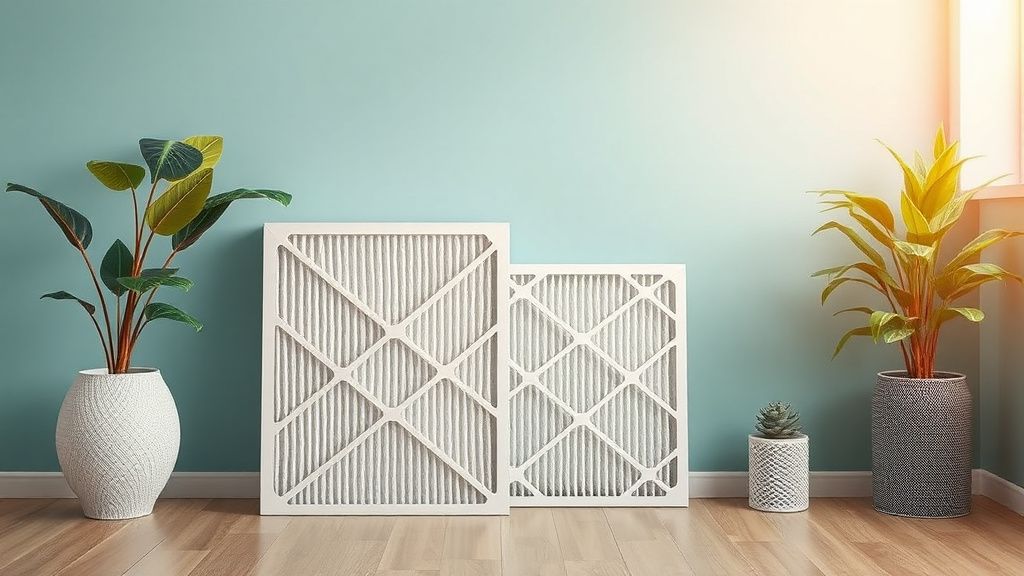
The Best Air Filters for Homes in Urban Environments
Urban environments present unique air quality challenges, from vehicle emissions and industrial pollutants to pollen and construction dust. Choosing the right air filter for your home can significantly improve indoor air quality (IAQ), reduce allergens, and protect your HVAC system. Here’s a guide to the best air filters for urban homes, along with key features to consider.
Why Urban Homes Need High-Quality Air Filters
Cities often have higher concentrations of airborne pollutants, including:
- Particulate matter (PM2.5/PM10): Tiny particles from exhaust, smoke, and dust.
- Volatile organic compounds (VOCs): Emitted by vehicles, paints, and cleaning products.
- Allergens: Pollen, mold spores, and pet dander that enter through open windows or ventilation.
A high-efficiency air filter can trap these contaminants, ensuring cleaner air indoors.
Types of Air Filters for Urban Homes
1. Pleated HVAC Filters (MERV 8-13)
Pleated filters with a MERV (Minimum Efficiency Reporting Value) rating between 8 and 13 are ideal for most urban homes. They balance filtration efficiency with airflow, making them suitable for standard HVAC systems.
- Best for: General dust, pollen, and larger particles.
- Pros: Affordable, widely available, and effective for most urban pollutants.
- Cons: Less effective against ultrafine particles (PM2.5) and VOCs.
2. HEPA Filters (MERV 17-20)
High-Efficiency Particulate Air (HEPA) filters capture 99.97% of particles as small as 0.3 microns, including smoke, bacteria, and fine dust.
- Best for: Homes near highways, industrial areas, or for allergy sufferers.
- Pros: Exceptional filtration for PM2.5 and allergens.
- Cons: Requires a compatible HVAC system (many residential systems can’t handle HEPA’s high resistance).
3. Activated Carbon Filters
These filters use activated charcoal to adsorb gases, odors, and VOCs—common in urban settings.
- Best for: Removing smoke, chemical fumes, and odors.
- Pros: Effective against VOCs and odors; often combined with HEPA in air purifiers.
- Cons: Doesn’t trap particulate matter alone; best paired with a particulate filter.
4. Electrostatic Filters
Electrostatic filters use static charge to attract and trap particles. They come in washable (reusable) and disposable versions.
- Best for: Reducing dust and pet dander.
- Pros: Washable options save money long-term.
- Cons: Less effective for very fine particles compared to HEPA.
5. UV-C Air Purifiers (Supplemental Filtration)
While not a filter, UV-C light kills mold, bacteria, and viruses. Often paired with HEPA/carbon filters in air purifiers.
- Best for: Germ-prone urban homes (e.g., near hospitals or dense housing).
- Pros: Reduces microbial growth in HVAC systems.
- Cons: Doesn’t remove particles or VOCs alone.
What to Look for in an Urban Air Filter
-
MERV Rating:
- MERV 8-11: Good for dust and pollen.
- MERV 13+: Better for smoke and fine particles (check HVAC compatibility).
-
Filter Material:
- Pleated synthetic media for higher particle capture.
- Carbon layers for odor/VOC removal.
-
Airflow Resistance:
- High-MERV filters can strain HVAC systems. Consult an HVAC professional if unsure.
-
Replacement Frequency:
- Urban filters clog faster. Replace every 1-3 months (check manufacturer guidelines).
-
Combination Systems:
- For best results, pair a MERV 13 filter with a standalone air purifier (HEPA + carbon).
Top Recommended Solutions for Urban Homes
-
For HVAC Systems:
- MERV 13 Pleated Filters: Traps fine dust and allergens without overwhelming most systems.
- Electrostatic Washable Filters: Cost-effective for frequent urban dust buildup.
-
For Air Purifiers:
- HEPA + Carbon Combo Units: Ideal for PM2.5 and VOC removal (e.g., near traffic-heavy areas).
- Smart Purifiers with Sensors: Monitors urban air quality in real-time (e.g., detects PM2.5 spikes).
Maintenance Tips for Urban Homes
- Check filters monthly due to higher urban pollutant loads.
- Seal windows and doors to reduce outdoor pollutant entry.
- Use exhaust fans when cooking or cleaning to vent VOCs.
Final Thoughts
Urban air quality demands robust filtration. A MERV 13 pleated filter is a great starting point for HVAC systems, while a HEPA + carbon air purifier adds extra protection against fine particles and chemicals. Regular maintenance ensures your filters perform optimally, keeping your home’s air clean despite city pollution.
By selecting the right filter and pairing it with smart habits, urban dwellers can breathe easier year-round.
Our picks worth a closer look
Phone cases · Sponsored · 15% off first order
Phone Case Gift — They pick the model · 2 minutes Code FIRST15GIFT
- Filtrete 16x25x1 AC Furnace Air Filter, MPR 1000 MERV 11Check on Amazon → — see current price and specs.