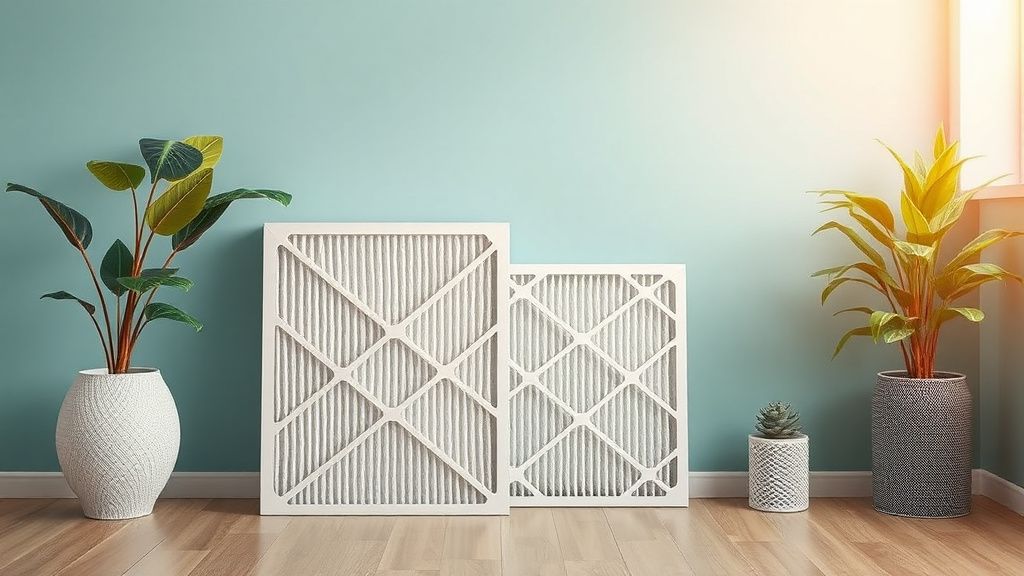
Understanding Air Filter Density and Its Impact on Filtration
When selecting an air filter for your HVAC system or air purifier, one of the most critical factors to consider is filter density. Density directly influences how effectively a filter captures airborne particles, its airflow resistance, and its overall lifespan. Understanding this concept can help you choose the right filter for your home’s air quality needs.
What Is Air Filter Density?
Air filter density refers to the thickness and material composition of the filter media, which determines how much particulate matter it can trap before clogging. Higher-density filters have more fibers packed tightly together, allowing them to capture smaller particles but also increasing resistance to airflow. Lower-density filters, while less restrictive, may allow more pollutants to pass through.
Key Components Affecting Density:
- Material Type: Fiberglass, pleated polyester, and HEPA filters vary in density.
- Pleat Design: More pleats increase surface area, improving particle capture without drastically reducing airflow.
- MERV Rating: Filters with higher MERV ratings (e.g., MERV 13+) typically have denser media to trap finer particles like allergens and smoke.
How Density Affects Filtration Performance
Phone cases · Sponsored · 15% off first order
Phone Case Gift — They pick the model · 2 minutes Code FIRST15GIFT
Particle Capture Efficiency
Denser filters excel at trapping smaller particles, including:
- Pollen and dust mites (5–10 microns)
- Mold spores (3–10 microns)
- Bacteria and smoke (0.3–1 micron)
For example, a MERV 11 pleated filter captures up to 85% of 1–3 micron particles, while a MERV 8 filter may only catch 20–35%.
Airflow Resistance
Higher-density filters create more static pressure, forcing your HVAC system to work harder. This can lead to:
- Reduced energy efficiency
- Strain on the blower motor
- Uneven heating/cooling if the system isn’t designed for dense filters
Solution: Check your HVAC manufacturer’s recommendations—some systems handle MERV 13 filters, while others max out at MERV 8.
Filter Lifespan
Dense filters clog faster in high-pollution environments (e.g., homes with pets or near construction). However, their increased particle-holding capacity can offset this if maintained properly.
Types of Filters by Density
1. Low-Density Filters (Fiberglass, MERV 1–4)
- Best for: Basic dust protection in low-traffic homes.
- Drawbacks: Poor at capturing allergens or smoke.
2. Medium-Density Filters (Pleated Polyester, MERV 5–12)
- Best for: Most households; balances filtration and airflow.
- Example: A MERV 8 filter traps dust and pollen effectively without overworking standard HVAC systems.
3. High-Density Filters (HEPA, MERV 13+)
- Best for: Allergy sufferers or areas with poor outdoor air quality.
- Note: HEPA filters (MERV 17+) often require a dedicated air purifier or modified HVAC systems.
What to Look for When Choosing a Filter
Phone cases · Sponsored · 15% off first order
Titan Case — Precision fit · 2,000+ designs Code FIRST15TIT
-
Check Your HVAC Compatibility
- Consult your system’s manual for the maximum recommended MERV rating.
- Avoid overly dense filters if you have an older furnace or limited airflow.
-
Assess Your Air Quality Needs
- For pet dander or allergies, aim for MERV 11–13.
- For basic dust control, MERV 6–8 suffices.
-
Prioritize Pleated Over Flat
- Pleated filters offer more surface area, improving longevity and efficiency.
-
Monitor Pressure Drop
- Replace filters when airflow noticeably decreases (usually every 1–3 months).
Balancing Density and Practicality
While dense filters provide superior filtration, they aren’t always the best choice. A MERV 13 filter in a system designed for MERV 8 can cause costly repairs. Conversely, a low-density filter won’t protect against asthma triggers. Always match the filter to your home’s needs and HVAC capabilities.
By understanding air filter density, you can optimize both air quality and system performance—ensuring cleaner air without sacrificing efficiency.
Our picks worth a closer look
Phone cases · Sponsored · 15% off first order
Phone Cases For Charity — Every case supports a cause Code GIVE10- Filtrete 16x25x1 AC Furnace Air Filter, MPR 1000 MERV 11Check on Amazon → — see current price and specs.
- GE MWF Refrigerator Water FilterCheck on Amazon → — see current price and specs.