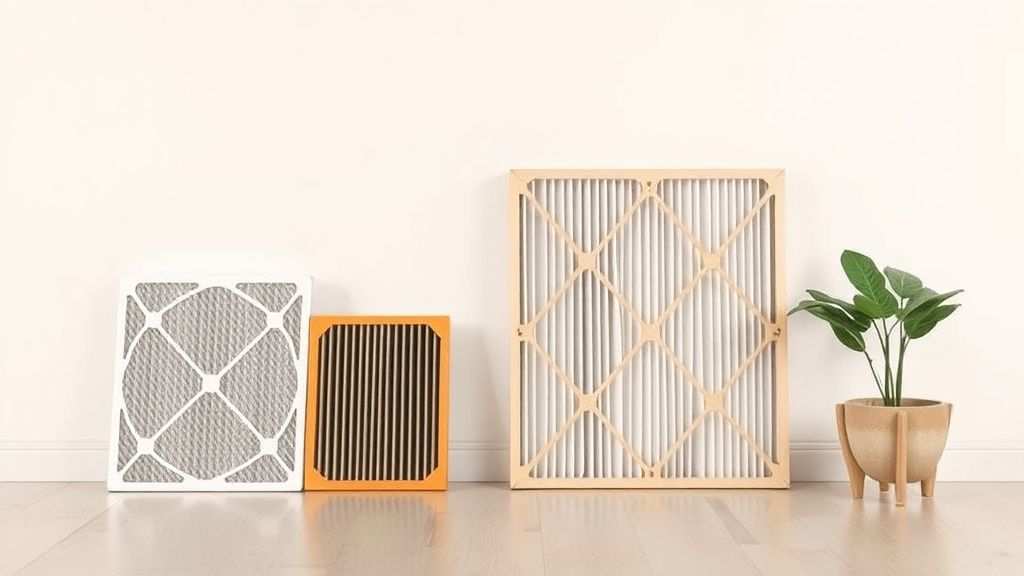
Understanding Air Filter Sizing: Common Mistakes and How to Avoid Them
Choosing the right air filter for your HVAC system or furnace is critical for maintaining indoor air quality and system efficiency. However, many homeowners make mistakes when selecting filter sizes, leading to poor performance, higher energy bills, and even equipment damage. This guide covers common sizing errors and how to avoid them.
Why Air Filter Sizing Matters
Phone cases · Sponsored · 15% off first order
Phone Case Gift — They pick the model · 2 minutes Code FIRST15GIFT
Air filters trap dust, pollen, pet dander, and other airborne particles, preventing them from circulating in your home. A properly sized filter ensures:
- Optimal airflow – Filters that are too restrictive or incorrectly sized can strain your HVAC system.
- Better filtration – A snug fit prevents air from bypassing the filter, improving air quality.
- Longer system life – Reduced strain on the blower motor and components extends HVAC lifespan.
Common Air Filter Sizing Mistakes
1. Assuming All Filters Are the Same Size
Many homeowners assume that a “standard” size (like 16x20x1) will fit their system. However, HVAC systems vary, and even a slight deviation (e.g., 15.5x19.5x1 instead of 16x20x1) can cause gaps, allowing unfiltered air to pass through.
How to avoid it:
- Measure the existing filter slot (length, width, and depth) before purchasing a replacement.
- Check your HVAC manual for exact dimensions.
2. Ignoring Filter Thickness
Air filters come in different thicknesses (1”, 2”, 4”, or 5”). While a 1” filter is common, thicker filters (like 4” or 5”) offer:
- Higher dust-holding capacity (longer lifespan).
- Lower airflow resistance (better efficiency).
How to avoid it:
- Verify if your system can accommodate a thicker filter (some require modifications).
- If using a 1” filter, replace it more frequently (every 1-3 months).
3. Forcing the Wrong Size Into the Slot
Some homeowners try to cram a slightly larger filter into the slot, bending the frame or leaving gaps. This reduces filtration efficiency and can damage the filter or HVAC unit.
How to avoid it:
- Never force a filter into place—if it doesn’t fit easily, it’s the wrong size.
- If your system requires an uncommon size, consider a custom-cut filter.
4. Overlooking MERV Ratings When Sizing
MERV (Minimum Efficiency Reporting Value) ratings indicate a filter’s effectiveness (1-16 for residential use). A higher MERV rating means better filtration but can also restrict airflow if the filter is too thick or dense for the system.
How to avoid it:
- Match the MERV rating to your system’s capabilities (MERV 8-13 is ideal for most homes).
- High-MERV filters (MERV 13+) may require a system upgrade to handle airflow resistance.
5. Not Checking for Airflow Direction
Most filters have an arrow indicating airflow direction (pointing toward the furnace or air handler). Installing a filter backward reduces efficiency and can damage the system.
How to avoid it:
- Always check the arrow and align it with the airflow direction.
- Mark the correct orientation on the filter slot if needed.
What to Look for When Choosing an Air Filter
Phone cases · Sponsored · 15% off first order
Titan Case — Precision fit · 2,000+ designs Code FIRST15TIT
To ensure you select the right filter, consider these factors:
- Exact Dimensions – Measure length, width, and depth (including fractions of an inch).
- MERV Rating – Choose based on your air quality needs and system compatibility.
- Filter Type – Options include fiberglass (basic), pleated (better filtration), and electrostatic (washable).
- Replacement Frequency – Thicker filters last longer but may cost more upfront.
- System Requirements – Some HVAC systems require specific filters (e.g., high-efficiency models).
Final Tips for Proper Air Filter Sizing
- Write down your filter size – Keep it in your phone or on the furnace for easy reference.
- Buy in bulk – If you use standard sizes, purchasing multiple filters saves trips to the store.
- Consult an HVAC professional – If unsure about sizing or MERV compatibility, ask a technician.
By avoiding these common mistakes, you’ll ensure better air quality, lower energy costs, and a longer-lasting HVAC system. Always double-check sizing before purchasing, and don’t hesitate to seek expert advice when needed.
Our picks worth a closer look
Phone cases · Sponsored · 15% off first order
Phone Cases For Charity — Every case supports a cause Code GIVE10- Filtrete 16x25x1 AC Furnace Air Filter, MPR 1000 MERV 11Check on Amazon → — see current price and specs.
- GE MWF Refrigerator Water FilterCheck on Amazon → — see current price and specs.